Buying a used car is a smart financial move for many people. But coming up with thousands of dollars for a down payment? That’s a different story.
If you’re short on cash but need reliable transportation, zero-down car financing might be the solution you’re looking for. This type of loan allows you to drive off the lot without putting any money down upfront. While it sounds appealing, it’s not without its trade-offs.
Understanding how zero-down financing works—and whether it’s right for your situation—can save you money and stress down the road. This guide will walk you through credit requirements, the pros and cons, top lenders, negotiation tactics, and alternative options if your credit needs work.
What is Zero-Down Car Financing?
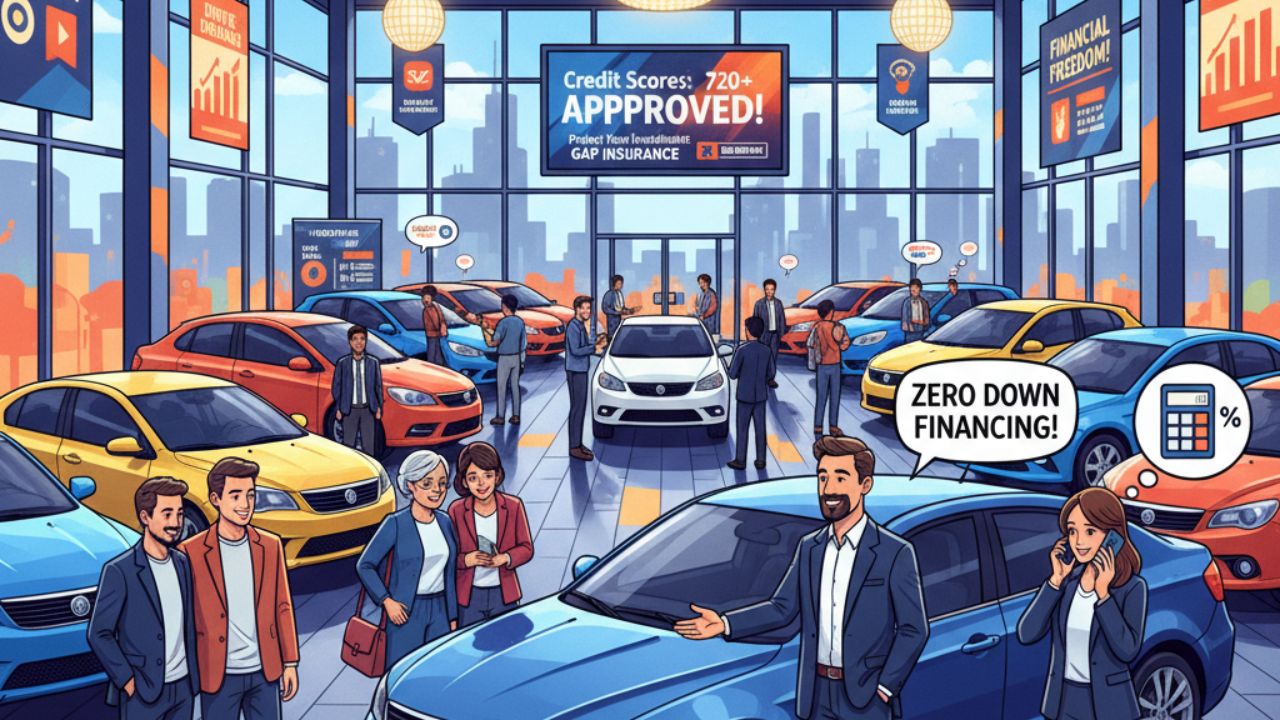
Zero-down car financing means you’re borrowing 100% of the vehicle’s purchase price. Instead of paying a portion upfront, you roll the entire cost into your monthly payments.
Lenders are taking on more risk when they offer this type of loan. Because of that, they typically charge higher interest rates and may require a strong credit score. You’ll also be underwater on the loan from day one, meaning you owe more than the car is worth.
This option works best for buyers who have good credit, steady income, and a clear understanding of the long-term costs involved.
Understanding Credit Score Requirements
Your credit score plays a major role in whether you’ll qualify for zero-down financing—and what kind of interest rate you’ll get.
Most lenders reserve no-money-down deals for borrowers with good to excellent credit. That usually means a score of 660 or higher. If your score is above 720, you’ll have access to the best rates and terms.
Buyers with fair credit (580–659) may still qualify, but expect higher interest rates and stricter loan terms. Some lenders may also require proof of income, employment verification, or a co-signer to offset the risk.
If your credit score is below 580, zero-down financing becomes much harder to secure. You’ll likely need to explore alternative options or work on improving your credit before applying.
Pros and Cons of No-Money-Down Deals
Zero-down financing has clear benefits, but it’s not without drawbacks. Here’s what you need to know.
Pros
Immediate access to a vehicle: You don’t have to wait months to save up for a down payment. If you need a car for work or family obligations, this option gets you on the road quickly.
Preserve your savings: Keeping cash in the bank gives you a cushion for emergencies, repairs, or other expenses that come up unexpectedly.
Flexible budgeting: If you have good credit, you may be able to negotiate favorable loan terms that keep your monthly payments manageable.
Cons
Higher monthly payments: Because you’re financing the full price of the car, your monthly payment will be larger than if you’d made a down payment.
More interest over time: The longer your loan term and the more you borrow, the more interest you’ll pay. Over five or six years, that can add up to thousands of dollars.
Negative equity: From the moment you sign the loan, you’ll owe more than the car is worth. If you need to sell or trade it in early, you could be stuck owing the difference.
Stricter approval criteria: Lenders take on more risk with zero-down loans, so they’re more selective about who qualifies. Expect a thorough credit check and income verification.
Top Lenders for Zero-Down Auto Loans
Not all lenders offer zero-down financing, and those that do may have different requirements. Here are some of the best places to start your search.
Credit Unions
Credit unions are member-owned and often offer more flexible terms than traditional banks. Many have programs specifically designed for members with good credit who need low- or no-down-payment loans.
Check with local credit unions to see what they offer. You’ll typically need to become a member, but the process is usually quick and affordable.
Online Lenders
Online lenders like LightStream, MyAutoLoan, and Carvana specialize in used car financing and may offer zero-down options for qualified buyers. These platforms let you compare rates, get pre-approved, and complete the process entirely online.
Online lenders tend to have faster approval times and more transparent pricing than traditional dealerships.
Dealership Financing
Some dealerships offer in-house financing with no money down, especially if they’re trying to move inventory quickly. While this can be convenient, dealership loans often come with higher interest rates.
Always compare dealership offers with what you can get from a bank, credit union, or online lender. Don’t assume the dealership is giving you the best deal just because it’s easy.
Manufacturer Incentives
Car manufacturers occasionally offer zero-down promotions on certified pre-owned (CPO) vehicles. These programs are typically reserved for buyers with excellent credit and may include low or 0% APR for a limited time.
Check the websites of major automakers like Toyota, Honda, and Ford to see if any promotions are currently available.
How to Negotiate the Best Interest Rates
Even if you qualify for zero-down financing, the interest rate you’re offered can vary widely. Here’s how to get the best deal.
Shop Around
Don’t accept the first offer you receive. Get quotes from at least three lenders—whether that’s a bank, credit union, or online platform. Having multiple offers gives you leverage when negotiating.
Improve Your Credit First
If you have time before buying, take steps to boost your credit score. Pay down existing debt, make all payments on time, and avoid opening new credit accounts. Even a small increase in your score can lower your interest rate significantly.
Consider a Shorter Loan Term
Longer loan terms mean lower monthly payments, but they also come with higher interest rates. If you can afford it, opt for a three- or four-year loan instead of five or six. You’ll pay less interest overall and build equity faster.
Bring Proof of Income
Lenders want to see that you can afford the loan. Bring recent pay stubs, tax returns, or bank statements to prove your income. The more confident they are in your ability to repay, the better your rate will be.
Negotiate the Car Price First
Before discussing financing, negotiate the price of the car itself. The lower the purchase price, the less you’ll need to borrow—and the less interest you’ll pay over time.
The Role of GAP Insurance
When you finance a car with zero down, you’re immediately underwater on the loan. GAP insurance (Guaranteed Asset Protection) can protect you if the car is totaled or stolen.
Here’s how it works: If your car is declared a total loss, your regular auto insurance will pay out the current market value of the vehicle. If you owe more than that value—which is likely with a zero-down loan—GAP insurance covers the difference.
Most lenders strongly recommend GAP insurance for zero-down loans, and some may even require it. You can usually purchase it through the dealership, your lender, or your auto insurance provider.
While GAP insurance adds to your overall cost, it can save you from a financial disaster if something happens to your car early in the loan term.
Alternative Options for Buyers with Poor Credit
If your credit score isn’t strong enough to qualify for zero-down financing, don’t give up. There are other ways to get behind the wheel.
Save for a Down Payment
This isn’t the answer you want to hear, but it’s often the smartest move. Even a small down payment—say, $500 to $1,000—can improve your chances of approval and lower your interest rate.
Find a Co-Signer
A co-signer with good credit can help you qualify for better loan terms. Keep in mind that if you miss a payment, it will hurt their credit too. Make sure you can afford the loan before asking someone to co-sign.
Consider Buy Here, Pay Here Dealerships
These dealerships specialize in financing buyers with poor credit. You’ll pay higher interest rates, but approval is easier. Just be cautious—some BHPH dealers charge exorbitant fees and may repossess your car quickly if you fall behind on payments.
Look into Subprime Lenders
Subprime lenders work with borrowers who have bad credit. While interest rates are higher, they may offer zero-down options if you meet their income and employment requirements.
Lease Instead of Buy
Leasing a used car isn’t common, but some dealers offer it. Lease payments are often lower than loan payments, and you may not need a down payment. Just know that you won’t own the car at the end of the lease term.
Final Tips for Success
Zero-down car financing can be a useful tool, but only if you use it wisely. Keep these tips in mind as you move forward.
Know your budget. Before you apply, calculate how much you can afford each month. Factor in insurance, gas, maintenance, and other costs—not just the loan payment.
Read the fine print. Understand the full terms of your loan, including the interest rate, loan length, and any fees. Don’t sign anything until you’re confident you know what you’re agreeing to.
Avoid unnecessary add-ons. Dealerships may try to sell you extended warranties, paint protection, or other extras. These add-ons inflate your loan balance and rarely provide good value.
Plan for the future. If you think you’ll want to trade in or sell the car before the loan is paid off, zero-down financing may not be the best choice. You’ll likely owe more than the car is worth for years.
Stay on top of payments. Missing even one payment can damage your credit and put you at risk of repossession. Set up automatic payments if possible to avoid late fees.
Financing a used car with zero down is possible, but it requires careful planning and a clear understanding of the costs involved. By doing your homework, comparing lenders, and negotiating smart, you can find a deal that works for your budget and gets you the reliable transportation you need.
