
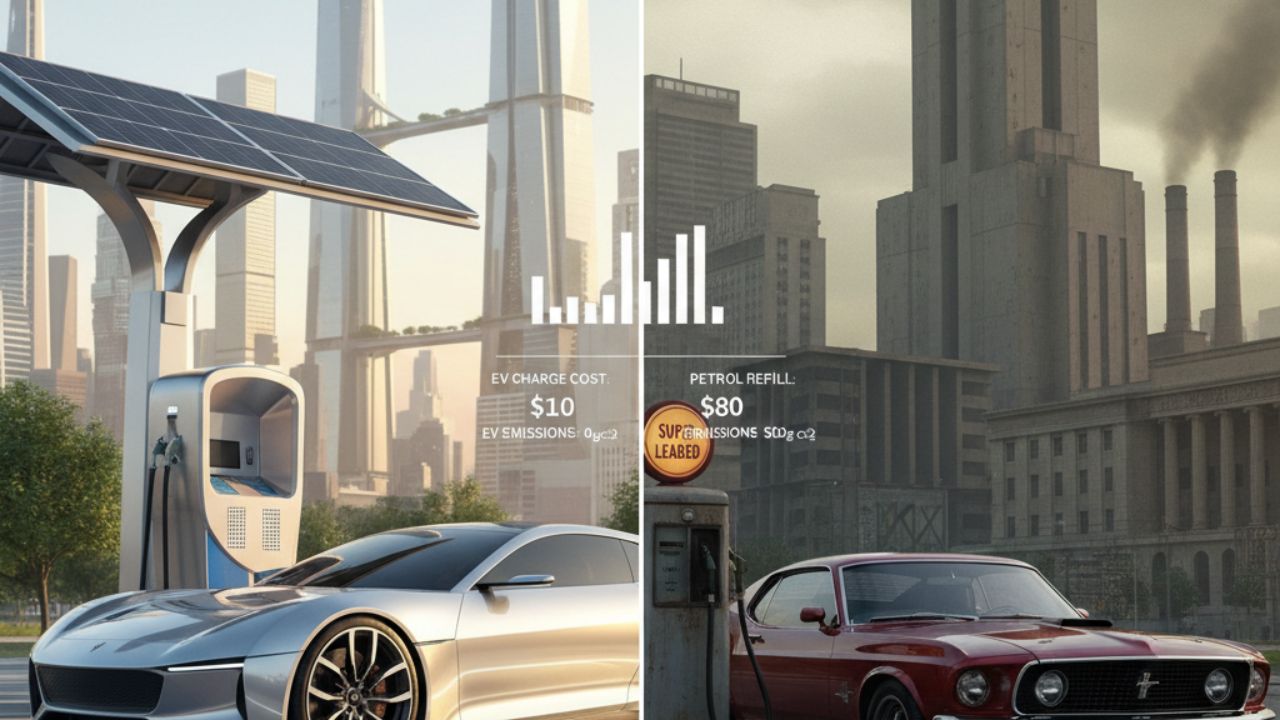
The automotive landscape is undergoing a massive shift. Walk down any street, and you will see a growing number of green license plates and charging cables tucked into driveways. Electric vehicles (EVs) have moved from a niche fascination to a mainstream reality. Yet, petrol cars remain heavily ingrained in our daily lives, offering familiarity and a deeply established refueling network.
As we approach 2026, buyers are facing a critical financial dilemma. Choosing a new vehicle is no longer just about horsepower or cargo space. It requires a detailed look at the total cost of ownership over the lifespan of the car.
The ultimate question for consumers is clear. Between electric and petrol cars, which will actually be more cost-effective by the time 2026 rolls around? Let’s break down the numbers, the trends, and the hidden costs to find out.
Understanding the Initial Investment
The moment you decide to buy a car, the financial journey begins. The upfront cost is often the largest hurdle, but it tells only part of the story.
Purchase Price Comparison
Historically, EVs have carried a higher sticker price than their petrol counterparts, largely due to the cost of battery manufacturing. However, this gap is closing rapidly. Automakers are scaling up production, which naturally drives down costs. Furthermore, government incentives for EVs—such as tax credits or point-of-sale rebates—can significantly reduce the initial purchase price. Petrol cars generally offer a lower entry price, but they lack these government subsidies.
Depreciation Factors
A vehicle is a depreciating asset. How well it holds its value determines how much money you lose when it is time to sell. Petrol cars have a predictable depreciation curve based on decades of market data. EVs, on the other hand, are highly dependent on battery health and technological relevance. As EV technology stabilizes and charging infrastructure improves by 2026, electric vehicles are projected to retain their value much better than early generations, potentially outpacing the resale value of traditional combustion engines.
Fueling Costs: A Major Deciding Factor
The day-to-day cost of keeping your car moving is where the financial paths diverge most sharply.
Electricity Costs
Charging an EV at home is generally the most economical way to “fuel” a vehicle, especially if you take advantage of off-peak electricity rates overnight. Public fast-charging stations are more expensive and are priced for convenience. Even so, the overall cost of electricity to charge a battery remains significantly lower than filling a fuel tank.
Petrol Costs
Petrol prices are notoriously volatile. They fluctuate based on global market dynamics, geopolitical events, and refining capacities. Looking ahead to 2026, experts anticipate that increased carbon taxes and stricter environmental regulations will push the baseline price of petrol higher.
Cost Per Mile
When you break it down to a cost-per-mile basis, electric vehicles almost universally win. An EV might cost a few cents per mile to drive when charged at home, while a petrol car easily costs three to four times that amount, depending on fuel efficiency and local gas prices. Over the course of 10,000 miles a year, these savings quickly add up.
Maintenance and Servicing
Taking your car to the mechanic is a universal dread, but the type of engine under the hood dictates the frequency and cost of these visits.
EV Maintenance
Electric vehicles are mechanically simpler. They have fewer moving parts, no exhaust system, no spark plugs, and no need for oil changes. Regenerative braking also reduces the wear on brake pads. Consequently, routine servicing for an EV involves mostly tire rotations, cabin air filter changes, and software updates.
Petrol Car Maintenance
Combustion engines require regular, scheduled maintenance to keep them running smoothly. Oil changes, transmission fluid top-ups, belt replacements, and engine tuning are unavoidable expenses. Over a five-year period, the routine maintenance costs for a petrol car are noticeably higher.
Long-Term Component Replacements
The biggest fear for EV buyers is battery degradation. Replacing a battery pack is expensive. However, modern EVs come with long battery warranties, often covering eight years or 100,000 miles. Petrol cars face their own long-term risks, such as transmission failures or blown head gaskets, which can also result in hefty mechanic bills.
Insurance and Taxes
Fixed annual costs are a crucial part of the ownership equation.
Insurance Costs
Insurance premiums for EVs are often slightly higher than for petrol cars. This is due to the specialized nature of EV repairs and the high cost of replacement parts, specifically the battery. However, as more EVs hit the road and repair networks expand, insurance rates are expected to normalize by 2026.
Road Tax and Government Levies
Governments use taxation to influence consumer behavior. In many regions, EVs enjoy exemptions or significant discounts on road taxes and registration fees to encourage adoption. Conversely, petrol cars are facing increasing emissions-based taxes. As 2026 approaches, cities are also expanding low-emission zones, which means driving a petrol car could incur daily tolls that EV drivers avoid entirely.
Environmental Impact and Hidden Costs
The financial implications of driving extend beyond your personal bank account.
Carbon Footprint
The production of an EV—specifically the battery—creates a larger initial carbon footprint than manufacturing a petrol car. However, once on the road, the EV offsets this deficit through zero tailpipe emissions. The overall lifetime carbon footprint of an EV is considerably lower, especially when charged via renewable energy sources.
Health Benefits
Reduced tailpipe emissions translate to better air quality in urban environments. While this does not directly put cash in your pocket, the hidden economic benefits of reduced healthcare costs and improved community well-being are substantial.
Resale Value Based on Consciousness
Consumer consciousness is shifting. By 2026, as environmental concerns become even more pressing, the demand for used EVs is expected to surge. A strong second-hand market boosts the resale value of electric cars, making them a smarter financial investment in the long run.
The 2026 Projections: A Forward Look
To understand what 2026 will look like, we have to look at the momentum of current trends.
Technological Advancements
By 2026, solid-state batteries and advanced lithium-ion designs will likely enter the mainstream market. This means longer ranges, faster charging times, and lighter vehicles. These advancements will make EVs even more practical and cost-effective.
Policies and Regulations
Governments worldwide have set ambitious targets to phase out internal combustion engines. By 2026, stricter fuel economy standards and higher carbon taxes will make owning a petrol car more expensive. Subsidies for EVs might decrease as they reach price parity, but the regulatory environment will heavily favor electric driving.
Market Trends
Automakers are funneling their research and development budgets almost exclusively into electric platforms. The variety of EV models available in 2026 will be vast, catering to every budget and lifestyle, further driving down costs through fierce competition.
Beyond the Wallet: Other Considerations
Money is important, but daily usability matters just as much.
Driving Experience
EVs offer a fundamentally different driving experience. They are whisper-quiet and provide instant torque, making them smooth and responsive in city traffic. Petrol cars offer the traditional engine noise and gear-shifting experience that some driving enthusiasts still prefer.
Range Anxiety vs. Charging Infrastructure
Range anxiety remains a hurdle for potential EV buyers. However, public charging infrastructure is growing at an unprecedented rate. By 2026, fast chargers will be ubiquitous along major highways and integrated into retail parking lots. Petrol stations are currently everywhere, but their numbers are expected to slowly decline as demand shifts.
Convenience and Lifestyle
If you have a driveway and can install a home charger, an EV is incredibly convenient. You wake up every morning with a “full tank.” If you live in an apartment without dedicated parking, a petrol car might still offer more convenience in the short term, though urban charging solutions are rapidly improving.
Case Studies: Two Drivers, Two Choices
To see how these factors play out, let’s look at two hypothetical drivers planning for 2026.
Driver A: The Suburban Commuter
Sarah drives 12,000 miles a year commuting from the suburbs. She buys a mid-range EV. Her initial purchase price is slightly higher, but she charges at home using off-peak rates. By 2026, she spends about $400 a year on electricity and minimal amounts on maintenance. Her road tax is zero. After five years, her total cost of ownership is remarkably low, and her car has retained excellent resale value.
Driver B: The Apartment Dweller
Mark lives in a city apartment and buys a similarly sized petrol car because he cannot charge at home. His upfront cost is lower. However, he spends $1,500 a year on petrol, pays for regular oil changes, and faces increasing city emission tolls. By 2026, Mark’s day-to-day expenses have eclipsed the initial savings on the purchase price, and his car’s resale value has dropped as buyer preference shifts to electric.
Making the Right Choice for Your Wallet
When evaluating electric versus petrol cars for 2026, the financial scales are tipping heavily toward electric. The combination of lower fueling costs, reduced maintenance, and favorable tax environments makes EVs the superior financial choice for most drivers over the vehicle’s lifespan.
However, the “better” choice still depends on your individual circumstances. If you lack access to home charging or frequently drive in remote areas with poor infrastructure, a highly efficient petrol or hybrid vehicle might still make financial sense in the short term.
As we look toward 2026 and beyond, personal transportation is clearly moving away from combustion. Taking the time to calculate your specific daily mileage, local electricity rates, and available incentives will ensure you make a decision that protects both the environment and your bank account.
Meta data
