
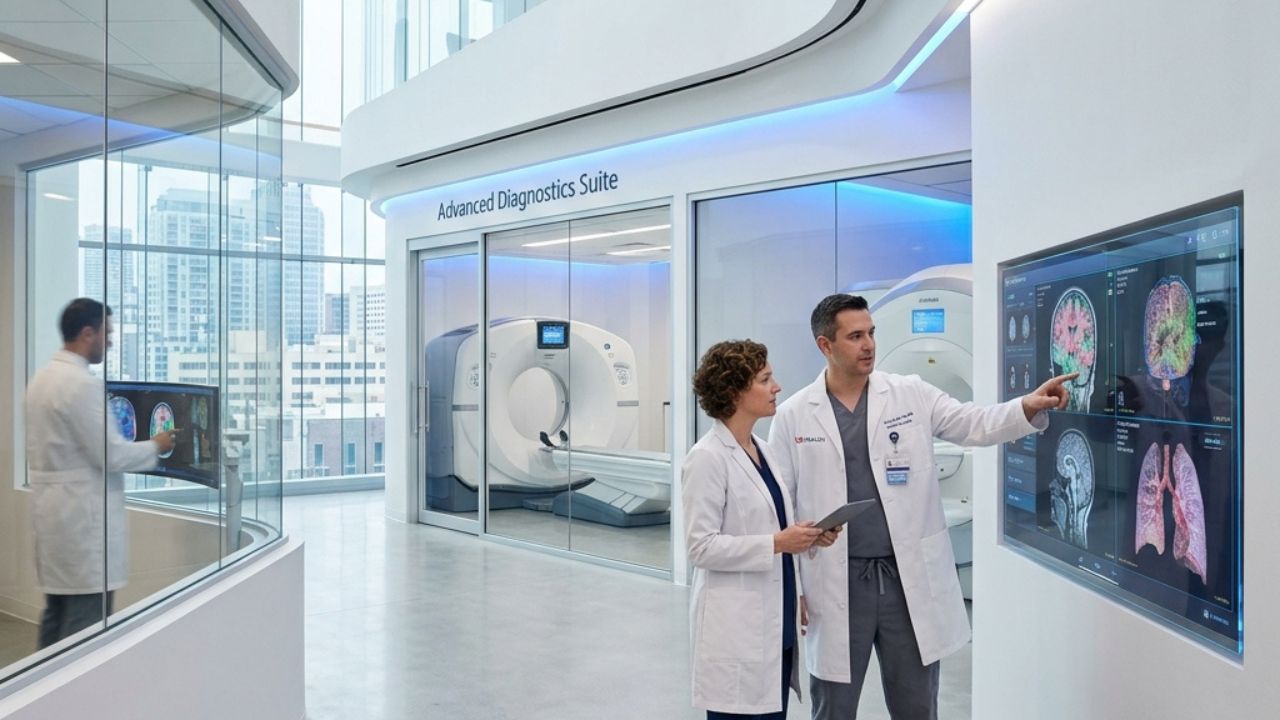
The top hospitals for advanced diagnostic testing in the USA include Mayo Clinic, Cleveland Clinic, Massachusetts General Hospital, Johns Hopkins Hospital, Stanford Health Care, University of Pennsylvania Health System, and New York-Presbyterian Hospital. These medical centers lead the nation in genomic testing, AI-powered pathology, 3T MRI imaging, and multidisciplinary diagnostic research.
Accurate medical treatment begins with an accurate diagnosis. Identifying the exact nature of a medical condition can mean the difference between a rapid recovery and a prolonged illness. Modern medicine relies heavily on advanced diagnostic testing to uncover hidden diseases, pinpoint genetic vulnerabilities, and map out the exact progression of complex conditions.
Finding the right facility to perform these critical tests is vital for patients facing complex or undiagnosed health issues. Certain medical institutions across the United States have heavily invested in state-of-the-art diagnostic technologies, specialized medical staff, and groundbreaking research. These hospitals provide diagnostic capabilities that far exceed standard blood tests and basic X-rays.
This guide highlights the top hospitals in the USA renowned for cutting-edge diagnostic capabilities. We will explore what makes a diagnostic hospital exceptional, detail the specific strengths of leading institutions, and provide practical advice on how to choose the right hospital for your specific medical needs.
What is advanced diagnostic testing and why is it important?
Advanced diagnostic testing refers to highly specialized medical procedures and technologies used to detect, monitor, and understand complex diseases. While basic diagnostics might identify the presence of an illness, advanced diagnostics reveal the precise biological and genetic characteristics of that illness.
What are the main types of advanced diagnostics?
Medical technology has rapidly evolved over the last decade. Today, physicians utilize several categories of advanced diagnostic tools:
- Genomic and Genetic Testing: These tests analyze an individual’s DNA to identify genetic mutations associated with specific diseases, such as hereditary cancers or rare metabolic disorders.
- Advanced Imaging: Tools like PET-CT scans, 3 Tesla (3T) MRI, and functional MRI (fMRI) provide highly detailed, three-dimensional views of the body’s internal structures and real-time brain activity.
- Liquid Biopsies and Biomarker Testing: Liquid biopsies detect cancer cells or cancer DNA circulating in the blood. This allows oncologists to monitor tumor progression without requiring invasive surgical biopsies.
- AI-Powered Diagnostics and Pathology: Artificial intelligence algorithms analyze tissue samples and medical images with incredible speed. AI-powered pathology helps identify microscopic abnormalities that human eyes might miss.
- Specialized Endoscopies and Interventional Radiology: These minimally invasive procedures allow doctors to view internal organs directly and take precise tissue samples using advanced image guidance.
Choosing a top-tier diagnostic hospital ensures patients have access to these sophisticated tools. High-level diagnostic centers provide faster, more accurate results, which directly translates to more effective and personalized treatment plans.
How do we identify the top diagnostic hospitals?
Ranking medical facilities requires looking beyond general reputation. To determine the best hospitals for advanced diagnostics, several rigorous criteria must be evaluated.
First, technology and equipment are paramount. The best hospitals consistently acquire state-of-the-art machinery, such as the latest generation of MRI scanners and robotic biopsy systems.
Second, the expertise of the medical staff plays a crucial role. Advanced machines require highly trained, board-certified specialists, radiologists, and pathologists to interpret the complex data accurately.
Research and innovation also separate top-tier hospitals from standard facilities. Leading hospitals actively participate in clinical trials and frequently develop entirely new diagnostic methods. Their patient outcomes and safety records consistently rank above national averages.
Furthermore, top diagnostic hospitals hold accreditations from organizations like the College of American Pathologists (CAP) and the American College of Radiology (ACR). Finally, these institutions employ a multidisciplinary approach. Radiologists, geneticists, and primary physicians collaborate seamlessly to analyze diagnostic data from multiple angles.
What are the top hospitals for advanced diagnostic testing in the USA?
Based on the criteria above, several medical centers stand out as national leaders in diagnostic medicine.
Why is Mayo Clinic (Rochester, MN) a leader in diagnostic testing?
Mayo Clinic in Rochester, Minnesota, operates one of the most comprehensive diagnostic departments in the world. Mayo Clinic Medical Laboratories processes millions of tests annually, serving both internal patients and health systems globally.
Mayo Clinic features unique advanced technologies, including specialized neuroimaging tools to detect early-stage Alzheimer’s disease and proprietary genomic tests for rare cancers. The institution places a strong emphasis on translational research, meaning diagnostic discoveries made in their laboratories are quickly brought to the patient’s bedside. Mayo Clinic’s multidisciplinary team model ensures that complex diagnostic puzzles are reviewed by a panel of experts across various specialties.
How does Cleveland Clinic (Cleveland, OH) approach advanced diagnostics?
Cleveland Clinic is internationally recognized for its cardiovascular and neurological diagnostics. The hospital’s Imaging Institute is one of the largest in the country, performing over two million examinations every year.
Cleveland Clinic utilizes innovative diagnostic procedures, such as advanced cardiac MRI and 3D echocardiography, to diagnose heart conditions with unprecedented precision. The hospital also heavily invests in molecular diagnostics to tailor cancer treatments to the specific genetic makeup of a patient’s tumor. This precision medicine approach significantly improves patient treatment efficacy and long-term outcomes.
What diagnostic innovations happen at Massachusetts General Hospital (Boston, MA)?
Massachusetts General Hospital (MGH) is a primary teaching hospital for Harvard Medical School. This academic connection fuels MGH’s leading-edge imaging and pathology departments.
The Martinos Center for Biomedical Imaging at MGH is a global hub for diagnostic research. Researchers at MGH have pioneered functional MRI (fMRI) techniques and advanced PET scanning methods. MGH operates specialized diagnostic centers, such as the Center for Integrated Diagnostics, which combines pathology and genetics to provide comprehensive diagnostic profiles for oncology patients.
What are the diagnostic capabilities of Johns Hopkins Hospital (Baltimore, MD)?
Johns Hopkins Hospital offers deeply comprehensive diagnostic services, particularly in the fields of neurology, oncology, and infectious diseases. The Department of Pathology at Johns Hopkins is historically significant, having made numerous foundational contributions to diagnostic medicine over the past century.
Today, Johns Hopkins Hospital continues to lead through rapid advanced technology adoption. The hospital utilizes high-resolution genomic sequencing to identify rare pathogens and characterize complex tumors. Their radiology department employs advanced AI algorithms to enhance image clarity and reduce the time required to interpret complex scans.
How does Stanford Health Care (Stanford, CA) utilize AI in diagnostics?
Located in the heart of Silicon Valley, Stanford Health Care seamlessly integrates artificial intelligence and computer science into medical diagnostics.
Stanford Health Care operates specialized diagnostic labs that focus on precision health. By combining genomic sequencing, wearable health data, and advanced imaging, Stanford aims to predict and prevent diseases before symptoms appear. Stanford researchers heavily utilize machine learning to analyze vast datasets of medical images, developing algorithms that can detect skin cancers and retinal diseases with the same accuracy as leading human specialists.
What makes University of Pennsylvania Health System (Philadelphia, PA) unique in diagnostics?
The University of Pennsylvania Health System (Penn Medicine) is a pioneer in advanced radiology and nuclear medicine. Penn Medicine researchers were instrumental in developing the modern PET scan.
Penn Medicine excels in genetic and genomic testing capabilities. The Center for Personalized Diagnostics at Penn Medicine analyzes solid tumors and blood cancers to identify specific genetic mutations. This focus on personalized diagnostics allows oncologists to prescribe targeted therapies, such as CAR T-cell therapy, which was also heavily researched and developed at Penn Medicine.
How does New York-Presbyterian Hospital (New York, NY) excel in medical testing?
New York-Presbyterian Hospital operates an extensive diagnostic infrastructure across multiple campuses, affiliated with both Columbia University and Weill Cornell Medicine.
Because of its location in New York City, the hospital has access to incredibly diverse patient populations for clinical study. This diversity strengthens their diagnostic research, ensuring that new tests are accurate across different demographic groups. New York-Presbyterian Hospital continually introduces innovations in diagnostic techniques, particularly in pediatric diagnostics and non-invasive cardiovascular imaging.
What should patients consider when choosing a diagnostic hospital?
Selecting a hospital for advanced testing requires evaluating your personal medical situation.
First, consider your specific medical condition. Match the hospital’s specialized expertise to your needs. If you require advanced cardiac testing, Cleveland Clinic might be the optimal choice. For rare genetic disorders, Mayo Clinic or Johns Hopkins Hospital often provide the most comprehensive resources.
Insurance coverage and cost are practical necessities. Advanced diagnostics can be exceptionally expensive. Verify that the chosen hospital is within your health insurance network and understand your out-of-pocket responsibilities for specialized procedures like genomic sequencing.
Location and accessibility also matter. Traveling while ill can be burdensome. Consider whether the hospital offers telehealth consultations for initial diagnostic reviews before you commit to traveling for in-person scans. Seeking second opinions and consultations is entirely normal for complex diagnoses; the best hospitals encourage this practice. Finally, read patient reviews and testimonials to understand the facility’s communication style and bedside manner.
What is the future of diagnostic testing?
The field of diagnostic testing is accelerating rapidly. Emerging technologies like artificial intelligence, machine learning, and nanotechnology are shifting the landscape. AI systems will soon process diagnostic imaging instantly, flagging anomalies for doctors before the patient even leaves the scanning machine. Nanotechnology holds the promise of microscopic diagnostic sensors capable of detecting single cancer cells within the bloodstream.
This technology drives the shift toward personalized medicine. Diagnostics will become increasingly tailored to the individual, moving away from broad disease categories toward highly specific biological profiles. Ultimately, preventative diagnostics will become the standard of care. By identifying genetic risks and microscopic biological changes early, healthcare providers will focus on early detection and risk assessment, treating diseases before they fully manifest.
Next steps for securing the best diagnostic care
Advanced diagnostic testing serves as the foundation for effective medical treatment. Facilities like Mayo Clinic, Cleveland Clinic, and Stanford Health Care have built extraordinary infrastructures to uncover the most elusive medical conditions. Their investments in advanced imaging, genomics, and artificial intelligence provide patients with clarity and targeted treatment pathways.
If you are facing a complex, undiagnosed, or severe medical condition, securing the best diagnostic care is essential. Consult with your primary healthcare provider about the potential benefits of specialized testing. Research your options thoroughly, seek referrals to top-tier institutions, and advocate for access to the diagnostic tools necessary to protect your health.
Frequently Asked Questions (FAQ)
Does health insurance cover advanced diagnostic testing?
Coverage for advanced diagnostic testing depends on your specific insurance plan and medical necessity. Most insurers cover advanced imaging (like MRIs or PET scans) if ordered by a physician to diagnose a specific symptom. Genomic testing and liquid biopsies may require prior authorization. Always contact your insurance provider to confirm coverage before scheduling complex tests.
How long does it take to get results from advanced diagnostic tests?
The timeline for results varies by the type of test. Advanced imaging results (MRI, CT) are typically available within 24 to 48 hours. Genomic sequencing and complex pathology biopsies can take anywhere from one to three weeks, as they require extensive laboratory analysis and interpretation by specialists.
Can I request advanced diagnostic tests at my local hospital?
Many local hospitals offer advanced imaging services, such as 3T MRIs and standard biopsies. However, highly specialized tests, like comprehensive genomic profiling or AI-assisted pathology, are often restricted to top-tier research hospitals. Your local physician can often collect the necessary samples and send them to a specialized diagnostic laboratory for analysis.
Is it worth traveling to a top hospital just for diagnostic testing?
Traveling to a top diagnostic hospital is highly recommended if you have an undiagnosed condition, a rare disease, or a complex cancer. These facilities possess multidisciplinary teams and specialized equipment that local clinics lack. An accurate diagnosis from a top institution can dramatically alter your treatment plan and improve your long-term health outcomes.
What are the risks associated with advanced imaging tests?
Advanced imaging tests are generally very safe. MRI scans use magnetic fields and carry no radiation risk, though they are unsuitable for patients with certain metal implants. PET-CT scans involve a small, safe amount of radiation exposure. Your medical team will carefully evaluate your medical history to choose the diagnostic test that offers the highest benefit with the lowest risk.
